
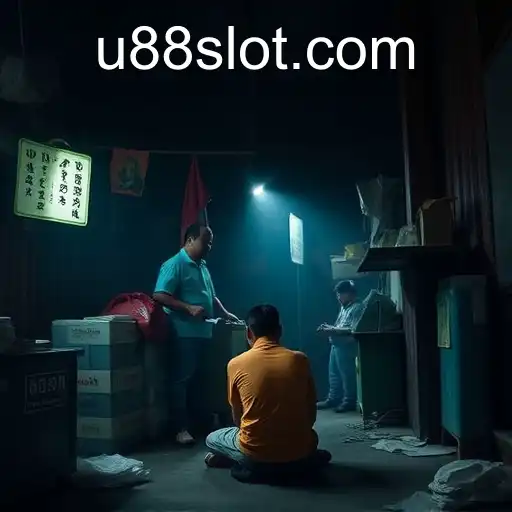
U88 | Exploring the World of Jueteng: An In-Depth Look at an Unseen Culture
U88’s This article delves into the intricate and clandestine world of Jueteng, unraveling its roots, operations, societal implications, and potential regulations.
Understanding Jueteng: The Game Behind the Veil
In the bustling towns and quiet provinces of the Philippines, the word Jueteng stirs up images of a long-standing numbers game that, despite legal implications, thrives under a cloud of mystery. This embodiment of both economic survival and a societal challenge demands a deeper dive into its operation and cultural significance.
A Brief History of Jueteng
Jueteng traces its roots back to the 19th century when it was reportedly brought to the Philippines by Chinese immigrants. Over the decades, the game morphed into a unique cultural phenomenon, intricately woven into the fabric of everyday life across the archipelago. Although technically illegal, its persistent popularity reflects the cultural and economic needs it fulfills.
The Mechanics of Jueteng
The game of Jueteng is notoriously simple yet shrouded in a veil of complex operations. At its core, players bet on a combination of numbers, typically ranging from 1 to 37. These numbers are drawn twice a day, and winners receive payouts adjusted according to their stakes.
The organizational hierarchy of Jueteng resembles a well-oiled machine. At the top, the financier known as the operator manages the overall operations. Below the operator are the cobradores, street-level collectors who gather bets, and the cabo, who acts as an intermediary between the operator and collectors.
Economic and Social Dimensions
For many, Jueteng is more than just a game; it becomes a critical source of income, especially in impoverished regions. The low entry barrier in terms of bet amounts allows widespread participation, offering the allure of quick cash that traditional lottery systems cannot match. This aspect highlights why the game maintains its stronghold despite legal restrictions.
On a social level, Jueteng serves as a communal activity, a topic that sparks conversations and camaraderie. The game generates a sense of anticipation and excitement, bonding participants over shared experiences of luck—whether good or bad.
The Legal Conundrum of Jueteng
Jueteng’s existence in a legal gray area paints a telling picture of law enforcement in the Philippines. Despite efforts to eradicate the game, its resilience showcases the challenges faced by authorities. Numerous attempts have been made to regulate or ban Jueteng, but these measures often fail due to deep-rooted corruption and community complicity.
Enforcement against Jueteng varies significantly across regions, influenced by local political dynamics and the willingness—or lack thereof—of officials to combat its proliferation. This inconsistent enforcement further ensconces Jueteng as a cultural mainstay.
Addressing the Jueteng Issue
Recognizing Jueteng's entanglement with economic survival is crucial. Any meaningful solution must involve alternative economic opportunities aligned with the needs of those reliant on the game for income. Introducing microfinancing and economic incentives can provide pathways to legitimate livelihoods.
Moreover, strengthening legal pathways involves not just intensified enforcement but also community involvement in regulatory processes. Legitimizing the game under strict state control, similar to lottery operations, might provide a feasible pathway that retains the game's cultural aspect while curtailing illegal activities.
The Role of Government and Community
The Philippine government stands at a crossroads regarding Jueteng. The choice remains between continued persecution and potential legalization that could regulate and tax the industry. The economic boon from such a decision could be significant if implemented with sound policy making.
Community initiatives are also paramount in reshaping perceptions of Jueteng. Programs focused on education and community engagement can offer individuals a broader scope of possibilities beyond the hold of gambling. Empowering local leaders to enact change is pivotal to any successful transition from dependence on Jueteng.
The Future of Jueteng
The debate surrounding Jueteng reflects broader societal issues within the Philippines, from economic inequity to governmental transparency. As the nation evolves, the approach to this numbers game could serve as a litmus test for broader reformative movements.
In the digital age, the concept of Jueteng may transform, adopting online platforms with wider accessibility but also greater regulatory challenges. Whether caught in traditional practices or navigating future developments, Jueteng's story remains a compelling narrative of cultural resilience and socio-economic complexities.
